
PAMP, Valcambi and Argor-Heraeus: Switzerland's gold refiners
Pick up a small gold bar in almost any Singapore shop and there is a fair chance it was made in Switzerland. Three names turn up again and again: PAMP, Valcambi and Argor-Heraeus. This guide covers who they are, why the market trusts them, and what the features on their bars actually do for you.
- •PAMP, Valcambi and Argor-Heraeus are Swiss refiners based in Ticino, and all are on the LBMA Good Delivery list.
- •LBMA accreditation holds a refiner to outside standards, and accreditation by a recognised body is one condition for GST-exempt investment gold in Singapore.
- •Lady Fortuna is PAMP's signature design, and Veriscan matches a PAMP bar against its production record.
- •We test every piece before sale with PMV and XRF, plus a Veriscan check on PAMP bars.
Who PAMP, Valcambi and Argor-Heraeus are
All three are in Ticino, the Italian-speaking canton in the south of Switzerland, not far from each other or from the Italian border. They take in gold from mines and from recycled metal, refine it to high purity, and turn it into bars, coins and products for industry.
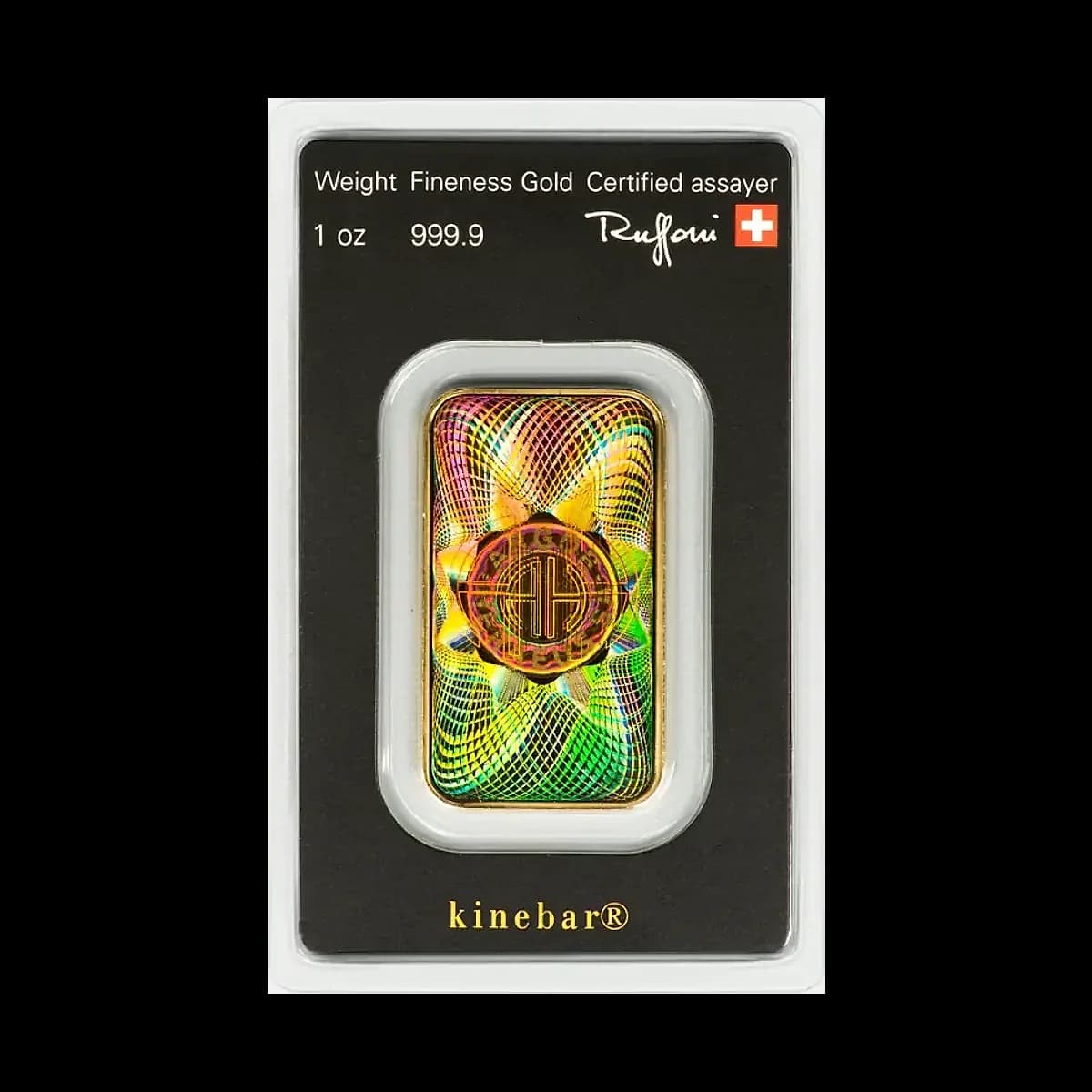
PAMP stands for Produits Artistiques Métaux Précieux. It is based in Castel San Pietro and is best known for minted bars with detailed artwork. Valcambi, in Balerna, makes both cast and minted bars, and its CombiBar is a thin bar scored into small pieces, often 1 gram each, that can be snapped off. Argor-Heraeus is in Mendrisio, and its bars tend to have a clean, businesslike look.
Switzerland has other refiners too, and Metalor is one whose bars we also stock. Still, when someone at the counter asks for a Swiss bar by name, it is nearly always one of these three.
Why Swiss refiners are so widely trusted
With bullion, trust boils down to one thing. Will the next buyer accept this bar without fuss? The Swiss refiners have earned that over decades, by turning out bars that test true time after time and by staying on the accreditation lists the professional market relies on.
A large share of the world's gold passes through Swiss refineries, so these firms supply banks, vaults and other dealers every day. Those customers audit their suppliers and have little patience for mistakes. A refiner that wants to keep them keeps its standards up, and the small bars sold over the counter come from the same operation.
Here is the part people sometimes miss. A Swiss bar holds no more gold than any other bar of the same weight and fineness: 1 ounce of 999.9 gold is the same metal whoever poured it. What a well-known name gives you is recognition. Buyers know what they are looking at, which makes the bar quicker to check when you sell.
LBMA Good Delivery accreditation in plain words
The LBMA is the London Bullion Market Association, which sets standards for the London gold and silver market. Its Good Delivery list names the refiners whose large bars London accepts for trading and storage. For gold, those are the heavy bars of roughly 400 troy ounces that sit in bank and central bank vaults.
Staying on the list takes ongoing work. A refiner has to meet strict rules on purity, weight and marking, pass regular checks, and follow the LBMA's responsible sourcing requirements. PAMP, Valcambi and Argor-Heraeus all appear on it.
Your 10 gram bar is not a Good Delivery bar, but the refiner's accreditation still counts for you. It means the company behind the bar answers to an outside standard. It also matters for tax. In Singapore, a gold bar only qualifies as investment precious metal, exempt from GST, if it is at least 99.5% pure, comes from a refiner accredited by a recognised market body such as the LBMA, and carries the refiner's mark, fineness and weight. IRAS's e-Tax guide sets out the full conditions.
Lady Fortuna: the design on PAMP bars
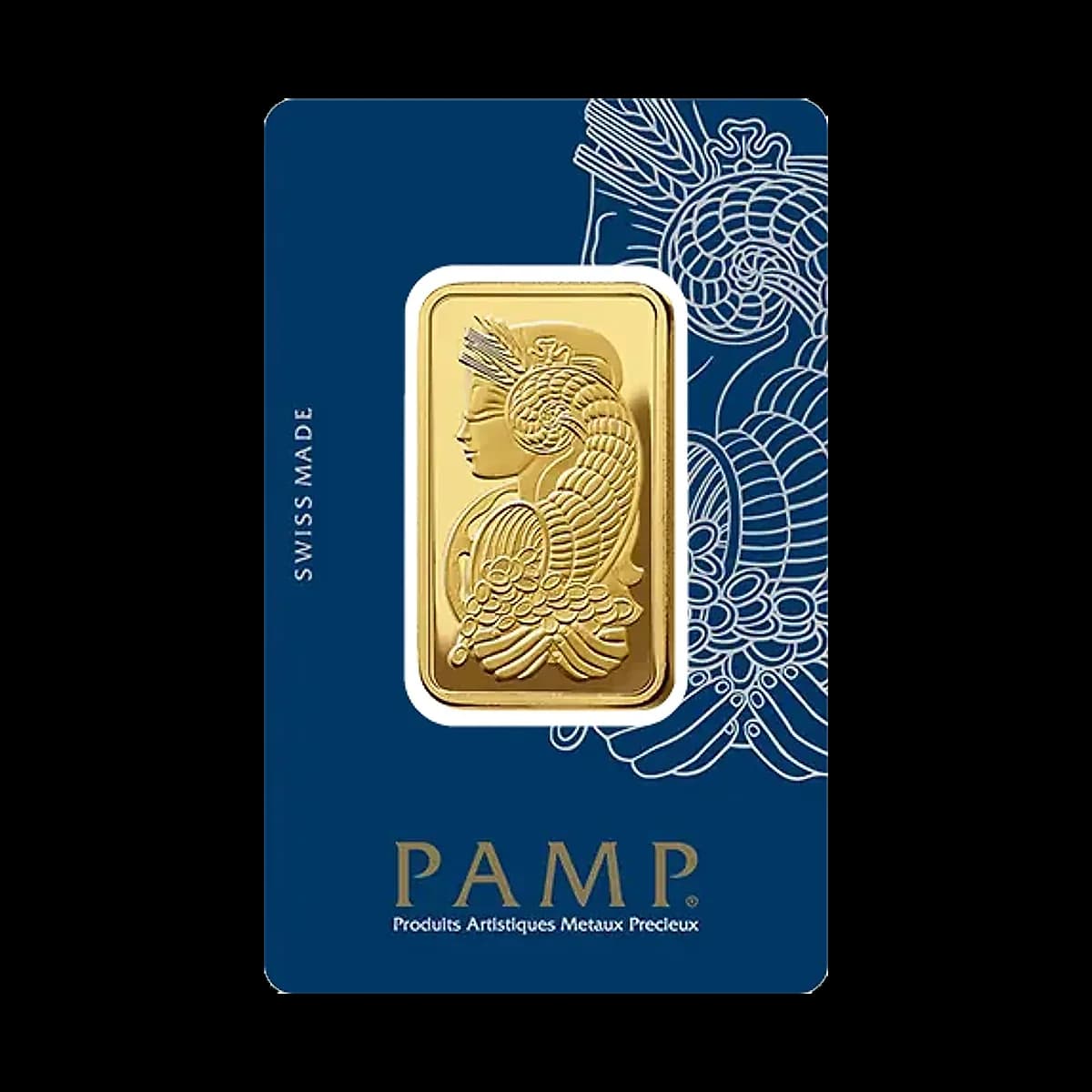
Turn over a minted PAMP bar and you will usually find Lady Fortuna, the Roman goddess of fortune, holding a cornucopia, the horn of plenty. It is one of the best-known designs in bullion. Plenty of first-time buyers simply ask for the one with the lady on it.
The artwork also helps with checking. Fine relief is hard to copy well, so we look for a crisp Fortuna with clean detail in the hair and the folds of the robe. Blurred lines, a soft or flat finish, or odd lettering all make us look harder.
The reverse carries the PAMP name, weight, fineness and a serial number. Smaller bars generally come sealed in a card with an assay certificate, and the serial printed on the card should match the one on the bar.
Veriscan on PAMP bars, and how we test
Veriscan is PAMP's own verification system. When a minted bar is made, its surface is scanned and recorded. The fine texture differs slightly from bar to bar, so the record works a bit like a fingerprint. Later, the bar can be scanned with a smartphone app and compared against that record.
We run a Veriscan check on PAMP bars, but that is one step among several. Every piece we sell is tested first, whatever the brand:
- PMV (Precious Metal Verifier) testing, which reads the metal's electrical resistivity, even through packaging, to catch the wrong metal inside
- XRF testing, which reads the surface composition and confirms the purity
- A Veriscan check on PAMP bars, matching the bar against PAMP's production record
- A close look at the markings, serial number and packaging by staff who handle these bars daily
Choosing between the Swiss brands
The gold inside is the same, so the choice usually comes down to looks and format. PAMP's Fortuna bars are a common pick for gifts at weddings, birthdays and Chinese New Year, since they present nicely in their sealed card. Some people prefer a plainer bar because the metal is all they care about. Others like Valcambi's CombiBar for the option of breaking off small pieces.
If your bar came sealed, leave the card intact. Gold keeps its value out of the packaging, but a clean card with a matching serial is quicker to check when you sell, wherever you sell. Keep it somewhere dry too. Singapore's humidity won't touch the gold, though it can mark cards and certificates.
On price, every bar we sell follows the live world spot price through the day, with the premium shown openly on each product page. At weekends, when the world market is closed, we sell at the last closing price. Premiums vary by brand and size, so compare them on our site rather than assuming one brand always costs more.
Questions people ask
Is a Swiss gold bar purer than one from another country?
Not necessarily. A 999.9 bar from any accredited refiner has the same purity, and the fineness is stamped on the bar. The Swiss names are known for consistency and recognition, not for holding more gold.
Can I check a PAMP bar with Veriscan myself?
PAMP offers Veriscan through a smartphone app, so owners can scan a compatible bar and compare it with PAMP's record. A steady scan in good light helps. When you buy or sell with us, we run our own Veriscan check alongside PMV and XRF testing.
Will you buy back a Swiss bar that is out of its card?
Yes, we buy gold back whether or not it is still sealed. The bar is tested at the counter and the final amount is set at that moment's price. An intact card just makes the checks quicker.
Do I need to show my NRIC to buy a PAMP bar?
Not for smaller purchases. For purchases above S$20,000 we take your NRIC or passport details, as the PSPM Act requires of every registered dealer in Singapore.
You can see live prices for PAMP, Valcambi and Argor-Heraeus bars at bullionking.sg/shop, or drop by Centrium Square on Serangoon Road to see them in person, no appointment needed. If you have a question first, WhatsApp us on +65 8088 4858.
General information, not financial, tax or legal advice. For the official rules see IRAS and the Ministry of Law.
Popular gold at today's prices
 Pre-order