
Gold purity explained: karats, 916, 999 and 999.9
Gold purity is written two ways. Jewellery tends to use karats, while bars and coins carry fineness, a three or four digit number stamped on the metal. Both tell you how much of the piece is actually gold, and that number decides what it is worth as metal and whether GST applies.
- •Karats count parts out of 24 and fineness counts parts out of 1,000: 22 karat is 916, and 24 karat is 999 or 999.9.
- •Jewellery is alloyed for strength and colour, so it is usually 916 or lower; most investment bars are 999.9.
- •Gold is valued on its pure gold content, which is why we test before naming a buy-back figure.
- •Properly marked gold of at least 99.5% purity from an accredited refiner is GST exempt; jewellery is not.
Karats and fineness: two ways of saying the same thing
Karats split gold into 24 parts. Pure gold is 24 karat. An 18 karat ring is 18 parts gold and 6 parts other metals, which makes it 75% gold.
Fineness counts in parts per thousand instead. A stamp of 750 means 750 parts in every 1,000 are gold, so it is the same as 18 karat. Bars and coins use fineness because it is more precise. It can show the difference between 999 and 999.9, and karats can't.
To get from one to the other, divide the karat number by 24 and multiply by 1,000. The answer lands close to the stamp, though the trade uses a few fixed figures by convention: 22 karat works out at about 917, but the stamp you will see is 916.
- 24 karat: 999 or 999.9 (99.9% to 99.99% gold)
- 22 karat: 916 (91.6% gold)
- 18 karat: 750 (75% gold)
- 14 karat: 585 (58.5% gold)
What 916 means on Singapore gold jewellery
Walk past the goldsmiths on Serangoon Road, a few minutes from our shop, and you will see 916 in nearly every window. It is 22 karat, 91.6% gold, and a great deal of the jewellery sold here is made to it, from wedding bangles to the chains given at a baby's full month.
The remaining 8.4% is other metals, commonly silver and copper. They are there on purpose. Pure gold dents and scratches easily, which doesn't matter for a bar sitting in a drawer but does for a bracelet worn every day and knocked against desks and MRT poles.
You will also come across 999 jewellery, often called chuk kam, which many families choose for Chinese wedding sets. It is pure gold, so it is softer, and the designs are usually chunkier to make up for it. Pieces set with stones or with fine detail are more often 18 karat, where hardness counts for more than purity.
999 and 999.9: the difference on a bar or coin
Both are 24 karat. A bar stamped 999 is at least 99.9% gold. One stamped 999.9, which the trade calls four nines, is at least 99.99% gold. The gap is under a gram in a whole kilogram, so in everyday terms both are pure gold.
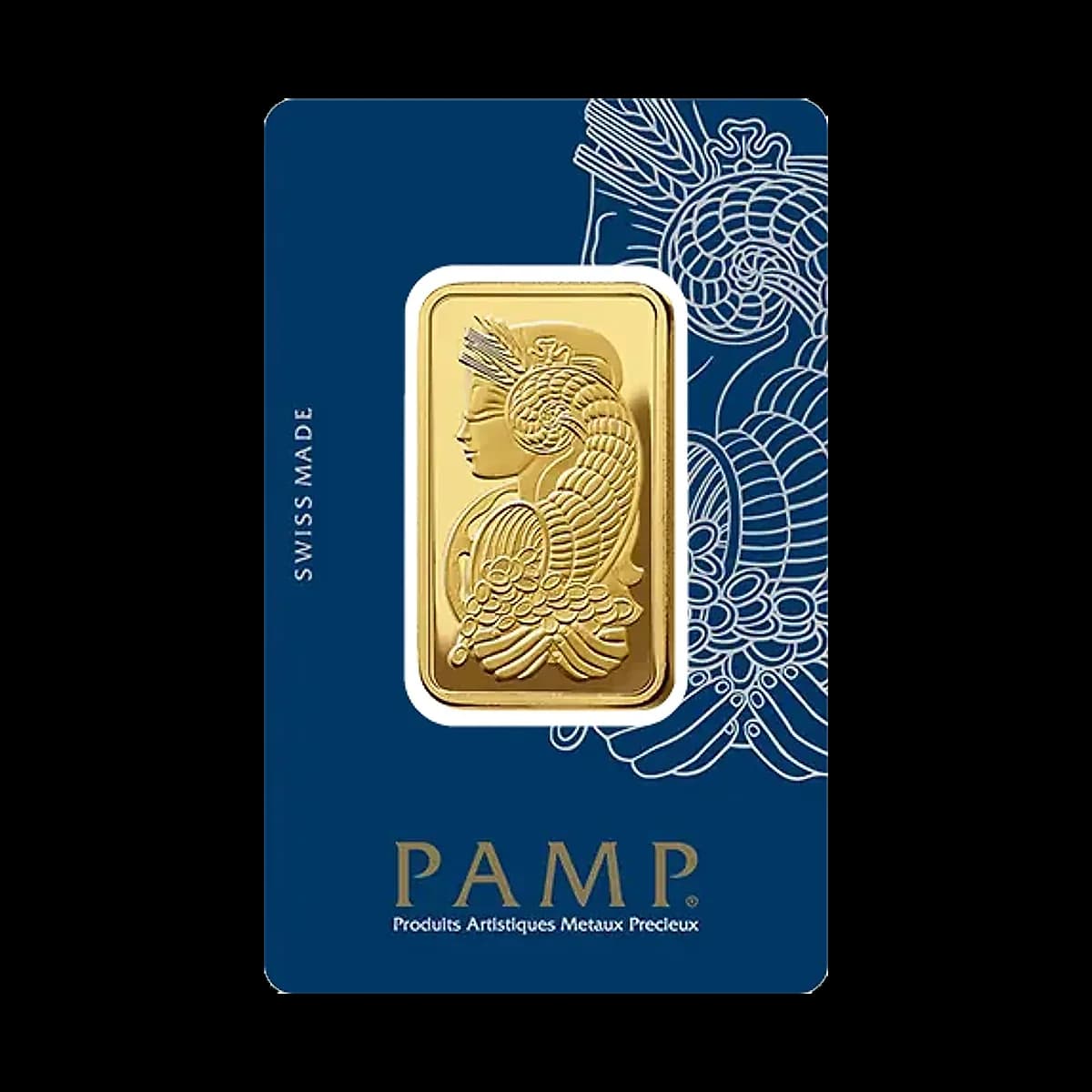
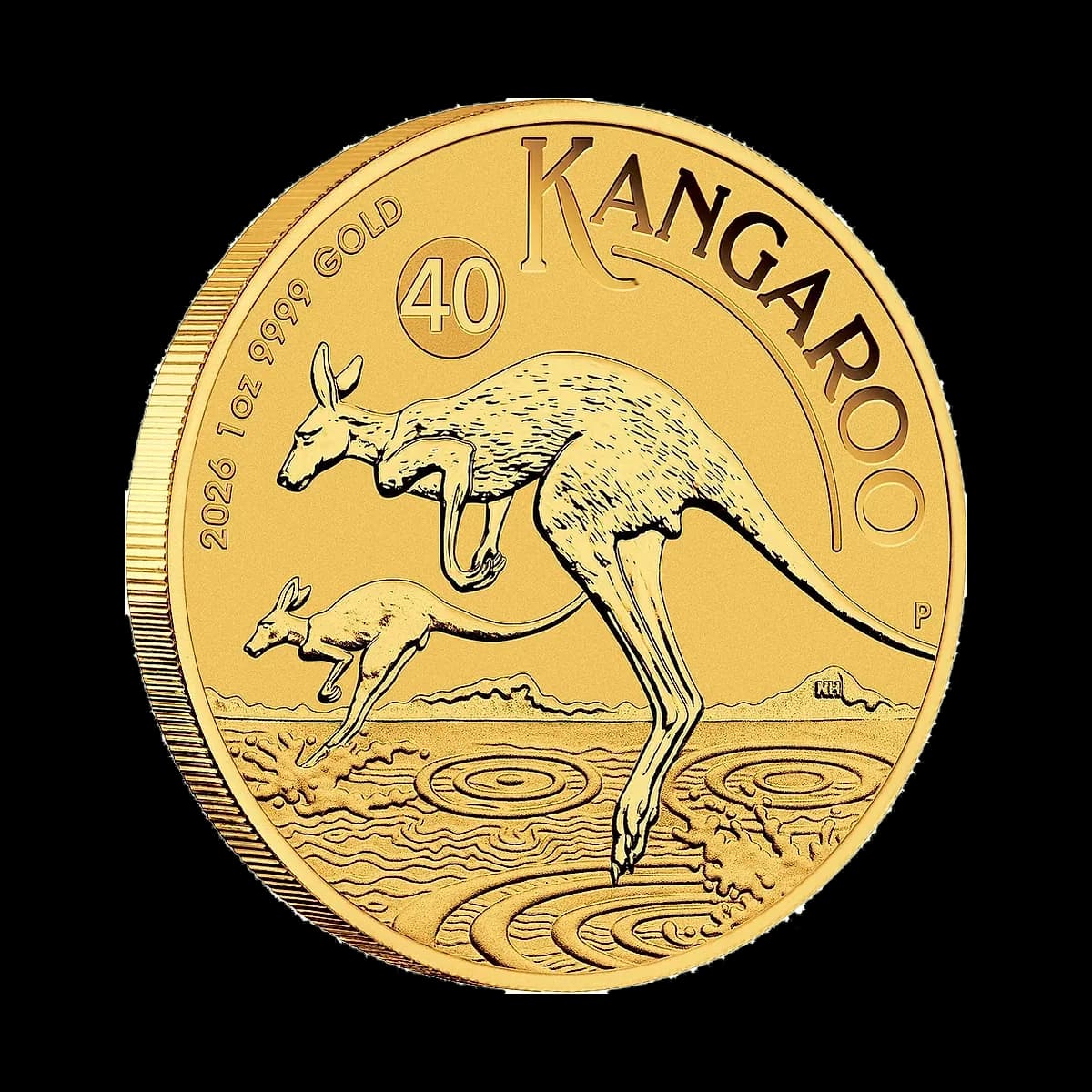
Most small investment bars from the big refiners are made to 999.9, and that goes for much of what we stock from PAMP, Argor-Heraeus, Valcambi and Metalor. The stamp is the thing to check, not the brand. Several well known gold coins are 999.9 too, including the Maple Leaf, Britannia, Philharmonic, Kangaroo and Buffalo.
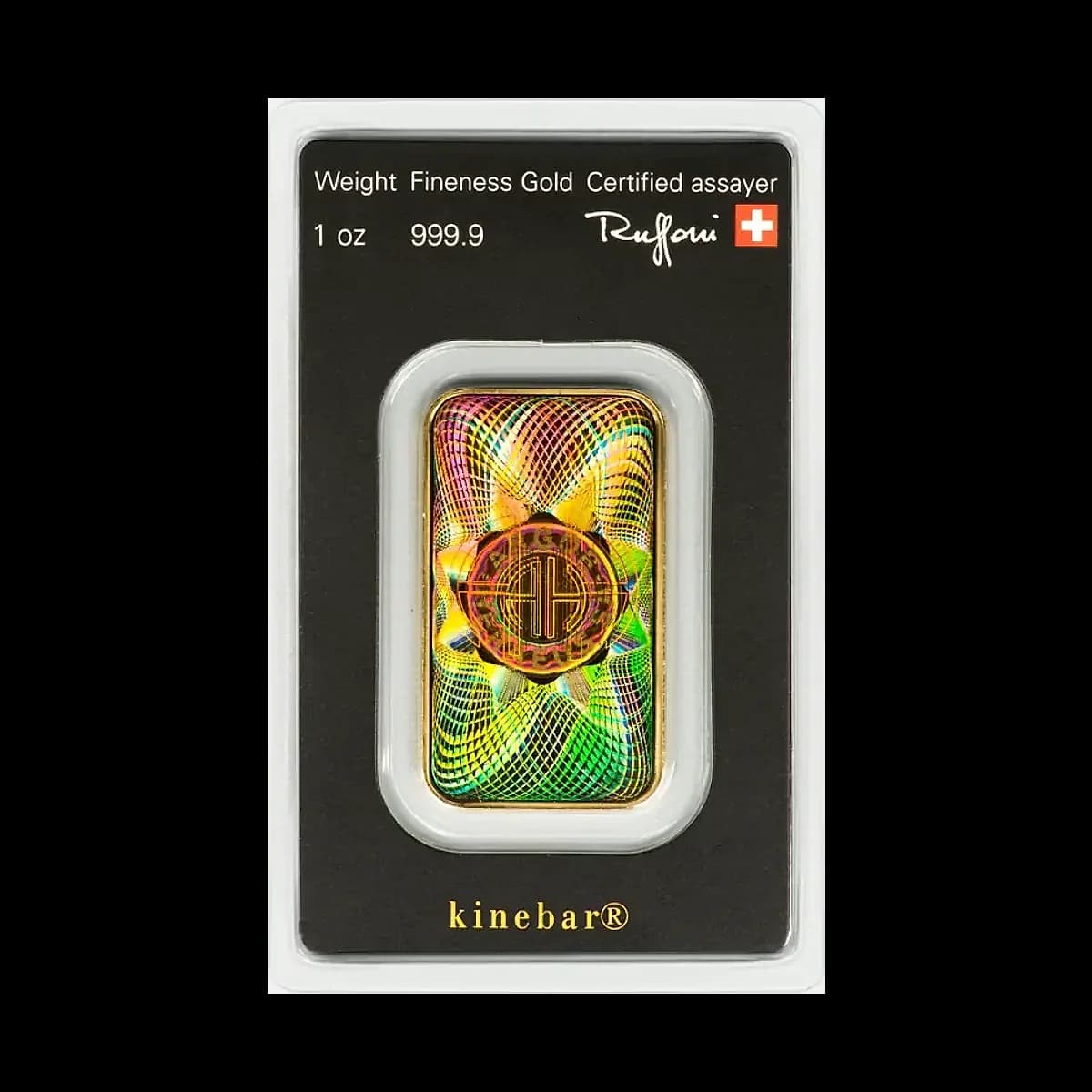
On a bar, you will find the fineness stamped next to the weight and the refiner's mark. Those three details together tell you how much gold you are holding and who made it.
Why investment gold is 999.9 and jewellery usually is not
A bar is made to be stored and traded on its gold content. Nobody needs it to survive daily wear, so there is no reason to harden it with other metals. Keeping it as pure as possible also makes it easy to value: weigh it, read the fineness, and you know how much gold is in it.
Jewellery has a different job. The alloy gives it strength, and it can change the colour too, which is how rose and white gold are made. Part of a jewellery price also pays for design and workmanship. When you sell, a dealer is looking mainly at the gold inside the piece, so that part of the price doesn't come back in the same way.
The bullion world has one familiar exception. The American Gold Eagle and the South African Krugerrand are 22 karat, but each is made slightly heavier than a one ounce 999.9 coin, so it still holds a full troy ounce of pure gold. The extra weight is alloy, and it makes the coins harder wearing in the hand.
Why purity changes what gold is worth
Gold is valued on its pure gold content. Put a 10 gram 916 bangle next to a 10 gram 999.9 bar and they weigh the same, but the bangle holds about 9.16 grams of gold and the bar about 10. As metal, the bar is worth more.
So when you bring gold to our counter, we test it before we name a figure. We test everything we sell as well, using a Precious Metal Verifier and XRF, with a Veriscan check on PAMP bars. For what we buy back, the final amount is set at the counter after testing, at that moment's price.
The same rule works the other way for 22 karat coins. A Krugerrand is valued on the full ounce of gold inside it, not on its total weight. For current figures, see live prices on our site at bullionking.sg/market rather than anything you have seen printed.
Purity and GST on gold in Singapore
Since 1 October 2012, investment precious metals have been exempt from GST in Singapore. With GST at 9%, it makes a real difference whether a piece qualifies.
For gold to count, it has to be at least 99.5% pure and in the form of a bar, ingot, wafer or coin. Bars and wafers must also come from a refiner accredited by a recognised market body such as the LBMA and carry the refiner's mark, fineness and weight. Coins must be legal tender in their country of issue and meet IRAS's other conditions. A 999.9 bar from an accredited refiner sits well above the line.
Jewellery is not investment precious metal, whatever its purity, so GST applies when a GST-registered business sells it. Gold below 99.5% doesn't qualify either, and on purity alone a 22 karat coin falls short of that figure. If you are unsure about a particular coin, IRAS's e-Tax guide on investment precious metals has the full rules, and you are welcome to ask us at the counter.
Questions people ask
Is 999 gold worse than 999.9?
Not in any practical sense. Both are 24 karat, and the difference is under a gram in a kilogram. Most modern bars are made to 999.9 simply because that is the standard the large refiners work to.
Can I sell my 916 jewellery to Bullion King?
We buy gold back, and the amount is set at the counter after testing, at that moment's price. For jewellery, especially pieces with stones, send a photo to us on WhatsApp first and we will tell you what to expect before you make the trip.
Why does my 999 bangle bend so easily?
Pure gold is soft. With nothing mixed in to harden it, it dents and bends with ordinary wear, which is why many people keep 999 sets for occasions and wear 916 day to day.
Does a Krugerrand contain less gold because it is 22 karat?
No. It is made heavier than a one ounce 999.9 coin so that it still holds a full troy ounce of pure gold. The extra weight is copper alloy, which makes it more scratch resistant.
You can browse bars and coins at bullionking.sg/shop and follow live prices at bullionking.sg/market. If you would rather see the pieces in person, drop by Centrium Square on Serangoon Road, or WhatsApp us on +65 8088 4858 with any questions.
General information, not financial, tax or legal advice. For the official rules see IRAS and the Ministry of Law.
Popular gold at today's prices
 Pre-order