
Gold bars or gold coins: how to choose for your purpose
Bars and coins hold the same metal. The real difference is in how you plan to buy, keep, give or sell what you own. Neither wins in every case, so here is how the two compare at our counter, and you can match them to what you have in mind.
- •Bars usually carry a lower premium per gram than coins, and larger bars lower than small ones.
- •Smaller pieces cost more per gram but let you sell part of what you hold.
- •Coins suit gifting; plain bars and common coins are simplest to sell back.
- •Keep the original packaging and store pieces dry, silver especially.
What separates a bullion bar from a bullion coin
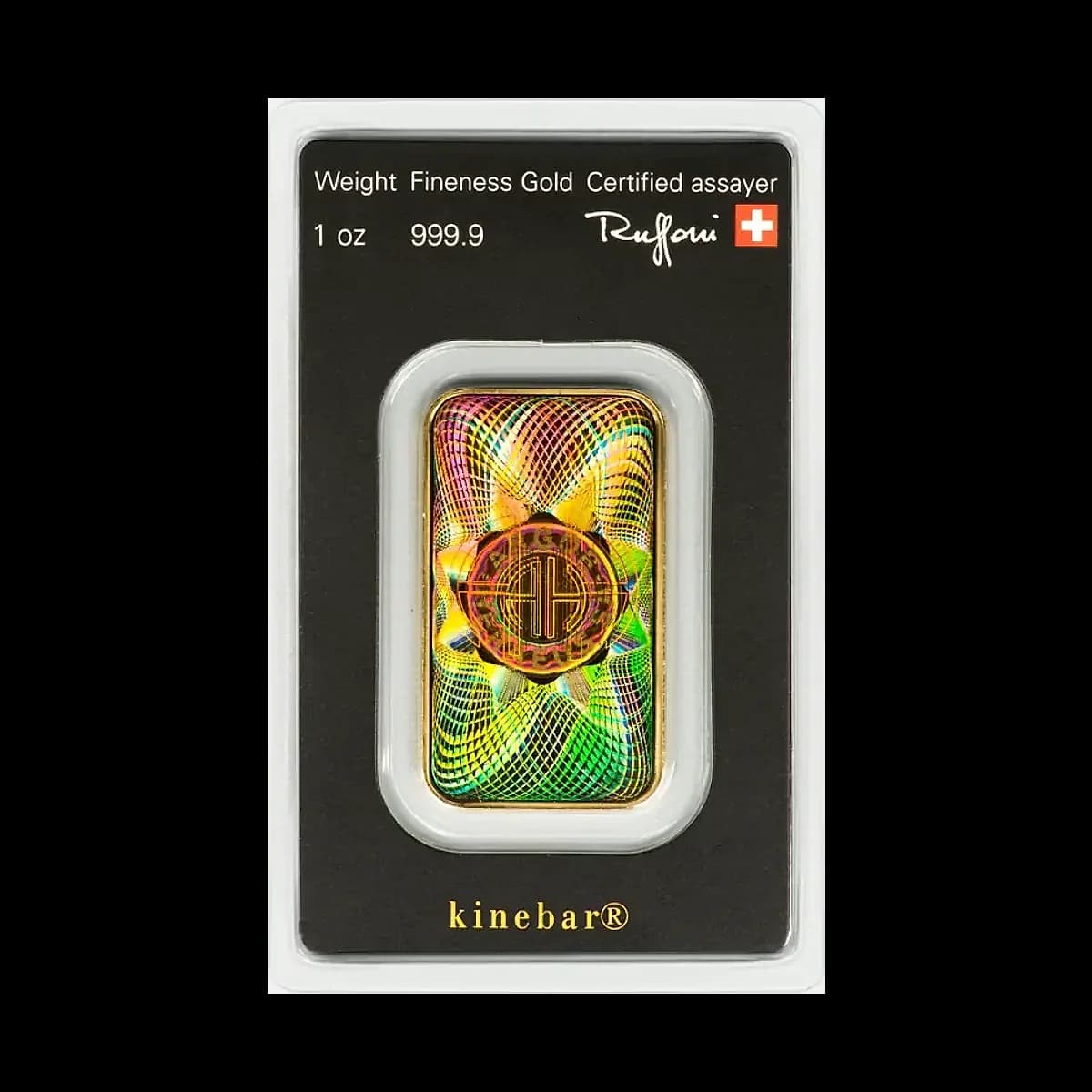
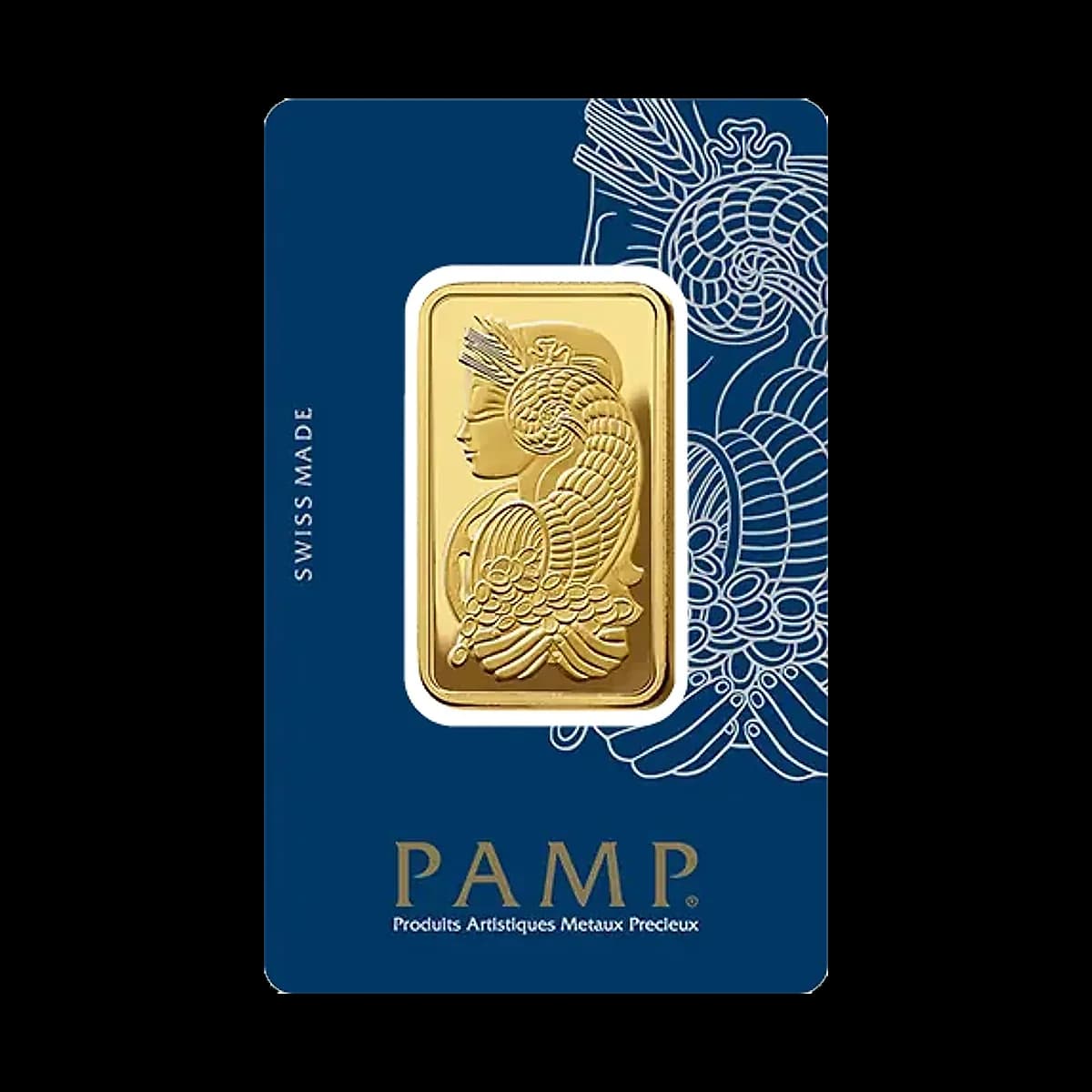
A bullion bar is a plain piece of refined metal from a refiner such as PAMP, Valcambi, Metalor or Argor-Heraeus. Stamped on it you'll find the refiner's mark, the fineness (usually 999.9 for gold), the weight and often a serial number. Smaller bars normally come sealed in a card printed with the same details.
Coins are struck by national mints, the Royal Canadian Mint or the Perth Mint for example, and are legal tender in their country of issue. The face value is symbolic. A one-ounce gold coin is worth far more as metal than the number on it, and what you pay for is the gold or silver plus the mint's design and finish.
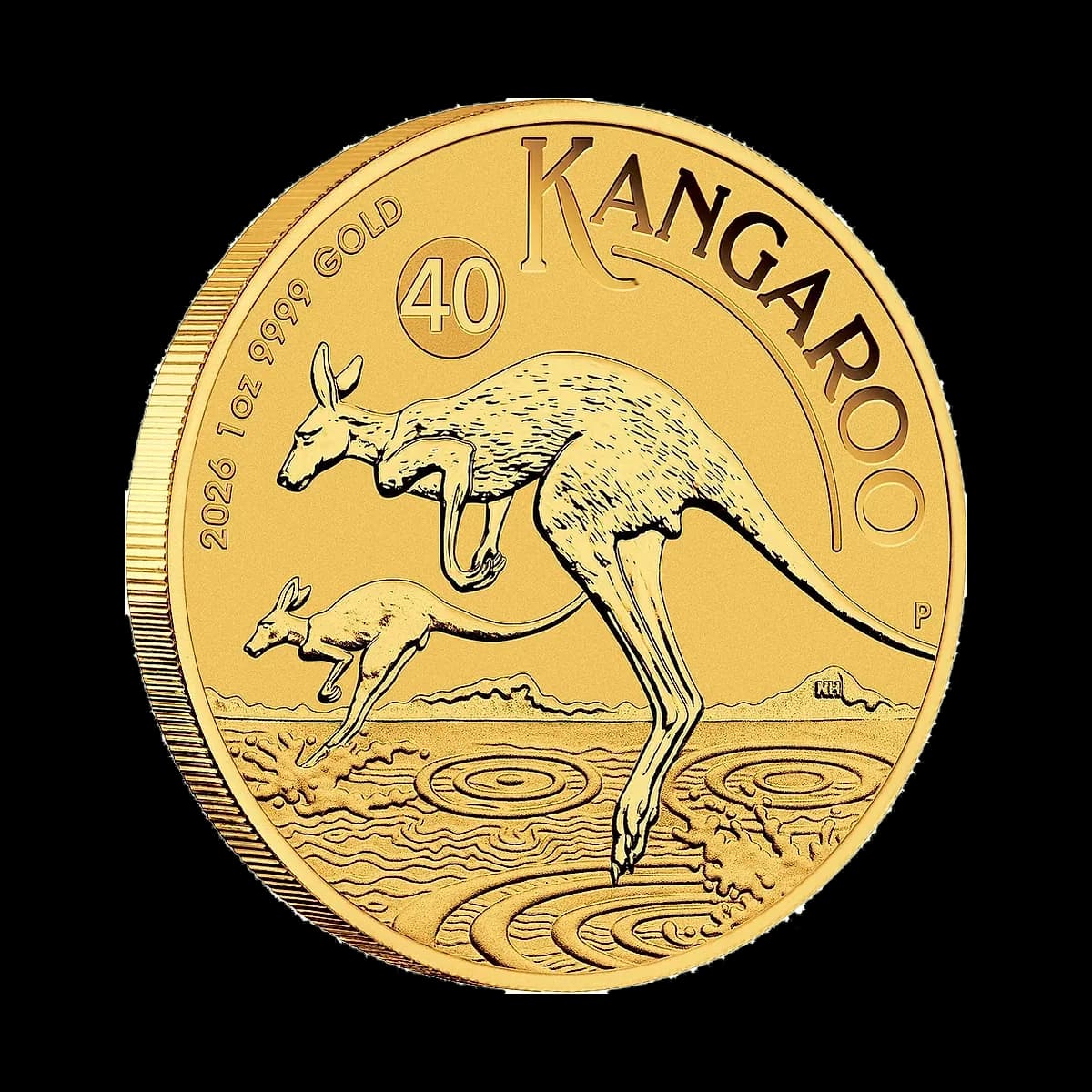
Most of the well-known gold coins are 999.9 fine: the Maple Leaf, Britannia, Philharmonic, Kangaroo and Buffalo. Two famous exceptions are the Krugerrand and the American Gold Eagle. Both are 22 karat (916), but they are made heavier so each one-ounce coin still holds a full troy ounce of pure gold.
Premium per gram: why bars usually cost less above spot
Every bullion product is priced at the live spot price plus a premium, and we show that premium on each product page. The premium pays for making, packaging, shipping and handling the piece. It is the part of the price that varies between products.
Coins generally carry a higher premium per gram than bars of the same weight. A mint spends more striking a detailed design with a polished finish than a refiner spends producing a plain bar. Among bars, the premium per gram tends to fall as the size goes up, since the fixed costs are spread over more metal. A 1 kg bar holds about 32.15 troy ounces, so its making cost works out small per gram.
If getting the most metal for your Singapore dollars is the main concern, bars, and larger bars in particular, usually come out ahead on this measure. Look at the live prices on our site per gram rather than per piece. The gap shows up quickly that way.
Recognisability and how pieces are checked
Dealers around the world know the major coins. A Maple Leaf is the same coin in Singapore, London or Toronto, and its fixed size, weight and design make it easy to check. That familiarity appeals to people who travel or may move overseas.
Bars from refiners on the LBMA Good Delivery list are just as well accepted in the trade. The brand stamp, serial number and sealed card all help identify them. On PAMP bars we also run a Veriscan check, which reads the bar's surface, before they go on sale.
Bar or coin, every piece we sell is tested first with a Precious Metal Verifier and XRF. Bring it back to sell and we test it again. Keeping the original card, capsule or box can make that quicker, so hold on to the packaging.
Divisibility and selling back
Give some thought to how you might sell later, not only how you buy. A 100 g bar is one unit. If you need part of its value, the whole bar goes. Ten 10 g bars, or a few one-ounce coins, let you sell some and keep the rest, at the cost of a higher premium per gram when you buy.
When you sell to us, the final amount is set at the counter after testing, at that moment's price. Coins and bars go through the same checks. Clean pieces in their original packaging are the simplest to handle, so don't prise open sealed cards or scrub coins with anything abrasive.
For larger purchases above S$20,000, we take your NRIC or passport details. The PSPM Act requires this of every registered dealer, not just us, and it only takes a few minutes. If you're unsure what to bring for a sale, WhatsApp us before you come in.
Gold for gifts: red packets, full-month celebrations and weddings
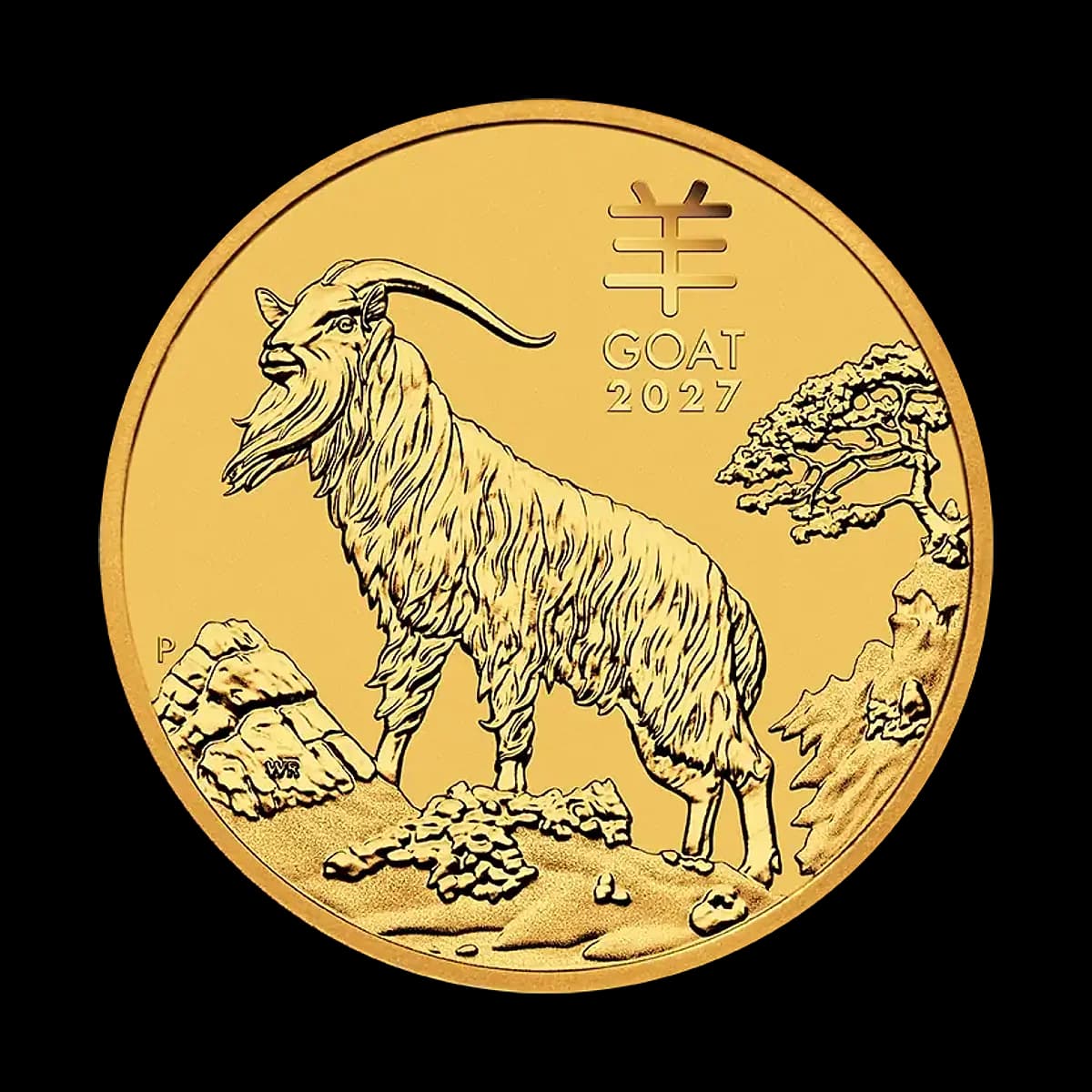
Coins often get picked here simply because they look the part. A Kangaroo or Maple Leaf in a clear capsule has a design worth showing off. Some mints also issue lunar-year designs, which go down well at Chinese New Year or a baby's full-month celebration.
Small bars of 1 g, 5 g or 10 g are popular gifts as well. They suit a modest budget, sit in a neat card with the refiner's details, and slip easily into a red packet or a wedding gift box. Some refiners print festive designs on the card too.
If the gift is meant to be kept, the design may matter more than the premium. If the person receiving it might sell one day, a plain bar or a common bullion coin will be the more straightforward piece to sell back.
Storing bars and coins in a humid Singapore flat
Pure gold doesn't tarnish, but our humidity still matters for silver and for packaging. Silver darkens over time, and silver coins sometimes develop pale marks known as milk spots. Loose pieces rubbing together will also pick up scratches.
Bars are compact and stack neatly, which helps in a small safe or a drawer in an HDB flat. Coins are better kept in their capsules or mint tubes. A few sachets of silica gel in an airtight box help either way, and holding pieces by the edges keeps fingerprints off.
People keep bullion at home, in a bank safe deposit box or with a storage provider. Whichever you use, check for yourself what protection, if any, applies. You can collect from our Serangoon Road shop for free, or have your order delivered within Singapore by courier.
Matching bars or coins to what you want
Start with what the metal is for, and the choice usually becomes clearer. These are the patterns we see most often across the counter:
Plenty of customers end up with a mix: a larger bar for most of their holding, plus a few coins or small bars for gifts or flexibility. On tax, bars and coins can both be GST-exempt as investment precious metals if they meet IRAS's conditions, which include a minimum gold purity of 99.5%. A 22 karat coin is below that figure, so GST may apply to it. IRAS's e-Tax guide has the full rules, or ask us about a specific piece.
- Most metal for your money: larger bars, compared per gram.
- Selling in parts: several smaller bars or one-ounce coins.
- Gifts and festivals: coins with good designs, or 1 g to 10 g bars in cards.
- Recognition abroad: well-known mint coins, or bars from LBMA Good Delivery refiners.
- Little storage space: bars, which stack compactly.
Questions people ask
Will you buy back a coin or bar I bought elsewhere?
We buy gold and silver back, and every piece is tested at the counter before the amount is set at that moment's price. If you're unsure about a particular piece, WhatsApp us the details before you come in.
Is a 22 karat Krugerrand less gold than a Maple Leaf?
No. A one-ounce Krugerrand is made slightly heavier, so it holds a full troy ounce of pure gold, the same as a 999.9 Maple Leaf. The extra weight is alloy, mostly copper, which makes the coin harder wearing.
Does a scratched coin or opened card matter when I sell?
It can slow things down, because staff need to check the piece more closely. Bullion is valued mainly on its metal, and the final amount is set after testing, but clean pieces in original packaging are the easiest to handle.
Can I see bars and coins side by side before choosing?
Yes. Walk in to our shop at Centrium Square during opening hours, no appointment needed. We can show you different sizes and brands so you can compare them in hand.
You can compare bars and coins per gram on our live prices page at bullionking.sg/market, or browse bullionking.sg/shop. If you'd rather see them first, drop by Centrium Square or WhatsApp us on +65 8088 4858.
General information, not financial, tax or legal advice. For the official rules see IRAS and the Ministry of Law.
Popular bullion at today's prices
 Pre-order