
Buy price and sell price: the spread on gold and silver explained
Every bullion dealer quotes two prices for the same bar: what you pay to buy it, and what they will pay to take it back. The gap between them is called the spread, and you will find one at every dealer, here and abroad. This guide covers what that gap pays for, why some pieces get a better buy-back than others, and how to compare dealers like for like.
- •The spread is the gap between a dealer's selling price and buy-back price, and every dealer has one.
- •It pays for testing, price risk, resale handling, refining where needed and compliance work.
- •Bars from recognised refiners and bullion coins in good condition are easier to resell, so the gap is usually narrower.
- •Compare the same product on both sides at the same moment, and count card or delivery fees.
What the spread actually is
Both prices start from the same point: the world spot price for gold or silver, which moves through the trading day. Our selling price is spot plus a premium. The buy-back price is set below that, and how far below depends on the product. The distance between the two is the spread.
A money changer works the same way. The board shows a buy rate and a sell rate for the same currency, and nobody expects them to match. With bullion the thing changing hands is a physical object, so it also has to be checked, held and sold on again.
None of this is a hidden fee. It is the difference between two prices that are both quoted openly. At Bullion King the premium on every product is shown on its product page, and live prices are on our market page, so you can see both sides before you decide anything.
What the spread pays for
When a dealer buys a bar back, the job is only half done. The piece has to be tested, recorded, held and then sold to someone else, and while it sits in the safe the dealer carries the risk that the price falls. The spread covers that work and that risk.
Some of the costs are obvious. Others you would only notice if you worked behind the counter:
- Testing every piece that comes in. We use a Precious Metal Verifier and XRF, plus a Veriscan check on PAMP bars, before anything goes back on sale.
- Price risk while the metal is held, since spot can drop between the day we buy and the day we sell again.
- Handling and resale: cleaning, repackaging where needed, and getting the stock back into the market.
- Refining for items that cannot be resold as they are, such as unbranded bars or scrap.
- Compliance under the PSPM Act. Dealers keep records, and for transactions above S$20,000 we take NRIC or passport details and carry out customer due diligence.
- The everyday cost of running a shop counter, from rent to staff wages.
Why known refiners and bullion coins usually fetch a better buy-back
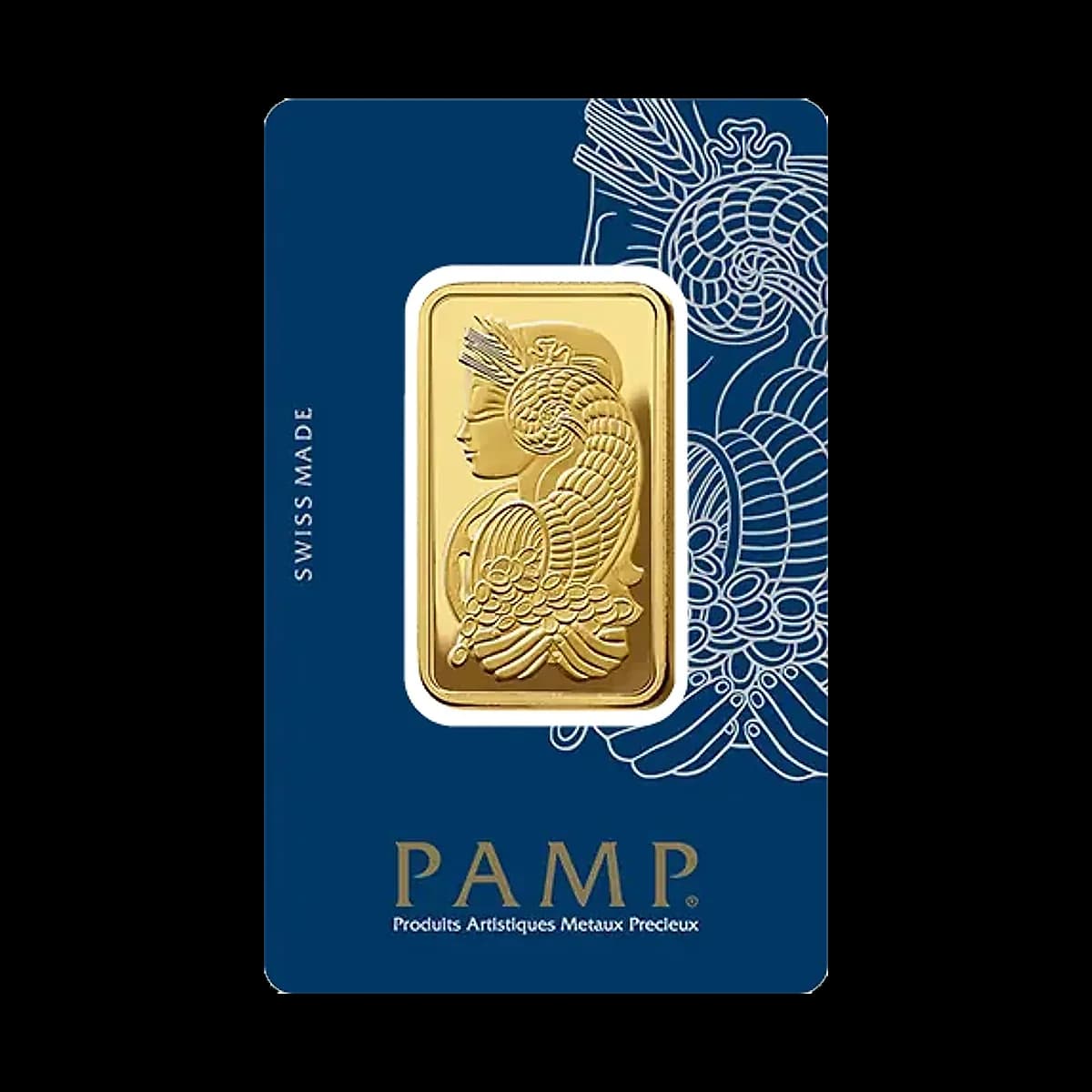
A dealer prices a buy-back around one question: how quickly and confidently can this be sold again? A PAMP, Valcambi or Perth Mint bar, or a Maple Leaf or Britannia coin, is recognised by buyers almost anywhere. The maker, weight and fineness are struck on it, and refiners accredited by bodies such as the LBMA have a record the market trusts.
That recognition cuts the dealer's cost and risk. Testing is quicker, there is a ready buyer, and the piece can usually go straight back on the shelf without being melted. Less work and less risk generally means a narrower gap between buy and sell.
An unbranded bar, a souvenir piece from a little-known mint or a bar with no markings is another story. Even if it tests as pure, many buyers will not take it as it is, so it may have to be melted and refined. That cost comes out of what you are offered.
Condition matters as well. A bar that is badly scratched, bent or engraved, or a coin with heavy marks, is harder to resell at full value. Our guide on sealed assay cards looks at whether keeping a bar in its original packaging is worth it for you.
Jewellery, small pieces and silver: where the gap is wider
Gold jewellery sits at the far end of the scale. Most of it is below bullion purity, 916 for a typical 22 karat piece, and it contains solder and other metals that have to be refined out before the gold can be used again. So the buy-back is based on the pure gold content less refining costs. The workmanship you paid the goldsmith for does not come back. Our separate guide on jewellery and bullion explains the difference in more detail.
Size has a quieter effect. Very small bars cost more per gram to make, and a buyer will not pay that making cost back to you. Larger bars from known refiners tend to sit closer to spot on both sides.
Silver follows the same logic with one twist. Because it is so much cheaper per gram, the fixed costs of handling, storing and moving it take up a bigger share of each piece's price. As a proportion, the spread on silver usually looks wider than on gold.
How to compare spreads fairly between dealers
Looking only at the selling price tells you half the story. A dealer with a lower premium may also pay less on buy-back, and the reverse happens too. The fairer test is to check both numbers for the same product at roughly the same time.
Pick one exact item, say a 1 oz PAMP bar or a 1 oz Maple Leaf, and note what each dealer sells it for and what they would pay to buy it back. Do this within a short window. Spot moves through the day, so a quote from this morning will not line up with one from this evening.
Then add up what it costs to get the metal into your hands. Card payments often carry a fee, and delivery may be charged while self-collection is not. At our shop, self-collection is free, and paying by PayNow or bank transfer avoids the card fee.
Last, ask what a posted buy-back figure depends on. It is an indication. At Bullion King the final amount is set at the counter after testing, at that moment's price, so it pays to understand what conditions apply before you compare numbers.
Timing, weekends and what a quote really means
Because both prices follow live spot, the spread is a gap that moves with the market, not a fixed dollar amount. On an active trading day you will see the buy and sell figures shift together.
At weekends the world market is closed, so we sell at the last closing price. Prices stay put until trading reopens.
If you plan to sell, bring the piece along with any assay card, receipt or certificate you have. Paperwork does not change what the metal is, but it makes the history clear. Our guide on selling gold in Singapore walks through the steps at the counter.
Questions people ask
If I buy a bar and sell it back the same day, will I get my money back?
Usually not in full, because the buy-back price sits below the selling price at any dealer. On top of the spread, spot may have moved during the day, in either direction.
Will you buy a bar I bought from another dealer?
We buy gold and silver back, and what counts is how the piece tests at the counter, not where the receipt came from. If you are unsure about a particular item, WhatsApp us a photo first and we will tell you what to expect.
Will opening the assay card lower what I am offered?
It can make a difference for some products, mainly because a sealed card makes checking quicker. Our guide on sealed assay cards goes through the trade-offs.
Why is the gap on silver wider than on gold?
Silver is much cheaper per gram, so fixed costs like handling, storage and transport make up a larger share of each piece's price. That shows up as a wider spread in proportion.
Is the buy-back price on your website the amount I will receive?
It is an indication based on live prices. The final amount is confirmed at the counter after testing, at the price at that moment.
You can check live buy and sell prices any time at bullionking.sg/market, or bring your piece to our shop at Centrium Square, 320 Serangoon Road. If you would rather ask first, WhatsApp us on +65 8088 4858.
General information, not financial, tax or legal advice. For the official rules see IRAS and the Ministry of Law.
Popular bullion at today's prices
 Pre-order